Best Near-Station Stays in Asahikawa
Near-station stays in Asahikawa put the JR ticket gates within a few minutes' walk, which matters more here than in most Japanese cities: Asahikawa Station is the junction for the Sekihoku, Soya and Furano lines, and the limited express Kamui and Lilac trains to Sapporo run on a fixed timetable that punishes a long walk with luggage. These stays trade neighbourhood atmosphere for a short, predictable route to the platform. Travellers building a multi-city Hokkaido rail loop, or catching an early Kamui to Sapporo, get the most from this group over a quieter but farther-out address.
Asahikawa is Hokkaido's second city, built around a rail junction rather than a single headline sight, and it reads that way at street level: functional, unpretentious, defined by the Sekihoku and Soya lines fanning out from the station and by winters cold enough to make Wi-Fi and a warm bathhouse feel like the real amenities. Heiwa dori's covered arcade carries the city's shoyu ramen counters a short walk from the platform. It is a stopover city by design, built for travellers changing trains toward Asahiyama Zoo, Biei or Furano rather than lingering for a week.
Where to stay
Built around the rail junction, not the view
The case for staying near JR Asahikawa Station is entirely logistical: a three-minute walk beats a fifteen-minute one on a morning when the Kamui to Sapporo leaves on the minute and does not wait. Asahikawa's station also concentrates the city's tram stops and bus terminal, so a near-station base doubles as a base for reaching Asahiyama Zoo or the Furano line without a taxi. It is the practical choice, not the atmospheric one, for anyone whose itinerary is built around train times rather than neighbourhood wandering.
The three-minute walk from JR INN Asahikawa to the ticket gates is the clearest example of what this group offers: no taxi, no fifteen-minute drag with luggage across icy pavement, just a short walk that turns a tight Kamui connection into a non-event. For a city built around its rail junction, this single detail changes how a whole day is planned, because a delayed check-out no longer threatens a train departing on a fixed minute, and a missed alarm still leaves room to make the platform on foot rather than scrambling for a taxi that may not arrive in time during a Hokkaido snowstorm.
Asahikawa Station is not a single-line stop; it is where the Sekihoku Main Line toward Abashiri, the Soya Main Line toward Wakkanai and the Furano Line all meet, alongside the Kamui and Lilac limited expresses to Sapporo. A near-station stay puts a traveller at the centre of that network rather than at the edge of it, which matters on a multi-city Hokkaido itinerary where every transfer window is tight, and where a delay on one line can force a fast rebooking onto a different platform entirely, something far easier to manage from three minutes away than from across town.
Being near the station also means being near the tram stops and bus terminal that serve Asahiyama Zoo, one of Japan's most visited zoos, and the buses toward Biei and Furano's flower fields in summer. A short walk from the room to the platform extends naturally into a short walk to the bus that reaches the rest of the region, without adding a taxi fare to either end of the day, which keeps a Hokkaido rail loop's daily budget predictable even across several stopovers and day trips built around Asahikawa as a base.
The trade-off is honest: a near-station stay is rarely the most atmospheric address in Asahikawa, and the group here favours function over character, business-hotel simplicity over ryokan charm. What it buys instead is certainty on travel days, the kind that matters when a missed Kamui means a genuinely long wait for the next one on a Hokkaido rail loop, and when a full day of sightseeing in the cold makes a fast, no-fuss return to a warm room worth more than a scenic outlook ever could. That reliability is worth more on a Hokkaido loop than a single scenic night ever would.
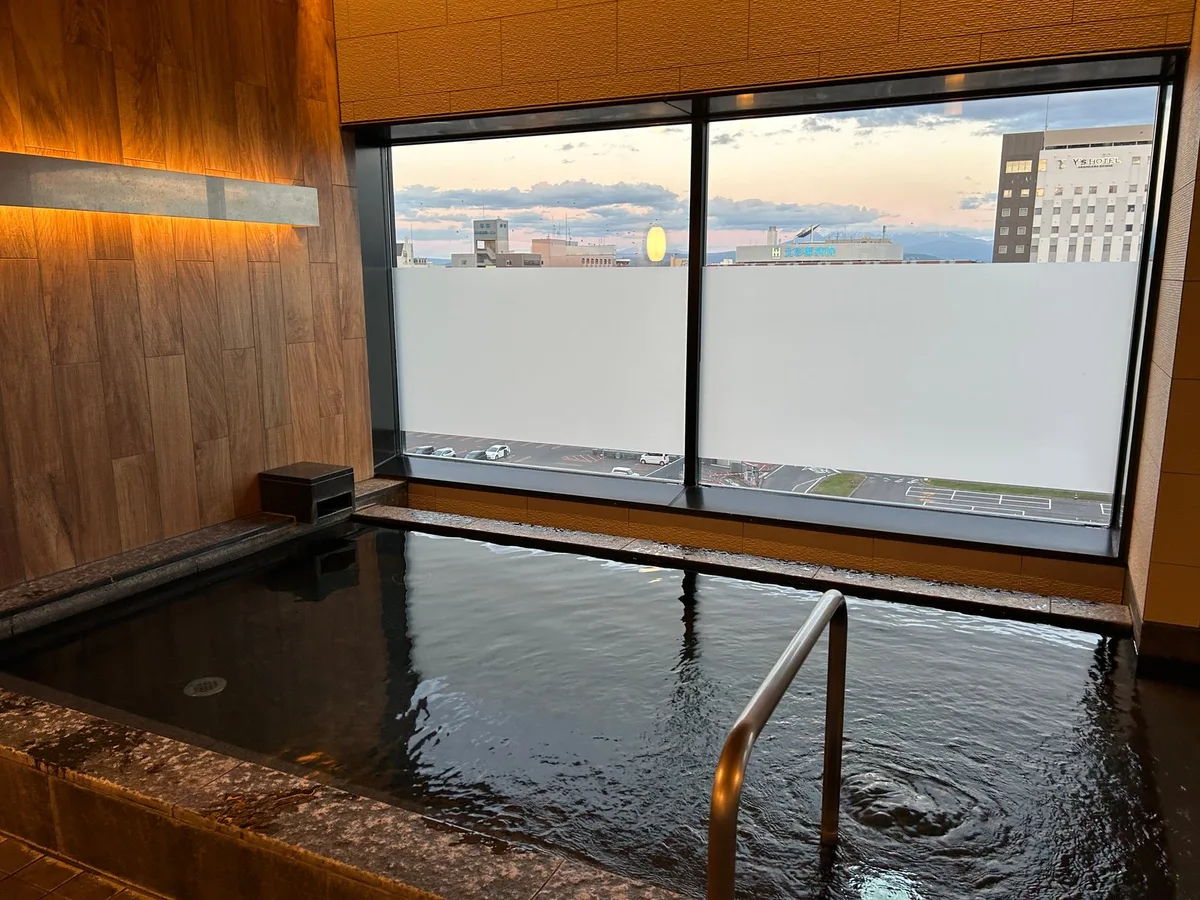
A traveller's takeI picked JR INN Asahikawa specifically for the three-minute walk to the Kamui platform, and it paid off on a morning when the front desk queue ran later than planned. The communal bathhouse the night before mattered more than I expected after a full day changing trains toward Abashiri on the Sekihoku line. For a one-night stop built entirely around a fixed departure time, that short walk did more for the trip than any amenity could have.
Local tips
- 1Check the Kamui and Lilac timetable before booking, morning departures to Sapporo run on a fixed schedule that a long walk can jeopardise
- 2Pack light for a near-station stay if you are catching an early train, it makes the short walk genuinely fast rather than just short
- 3Use the tram stops by the station to reach Asahiyama Zoo rather than a taxi, it is cheaper and just as quick
- 4Book breakfast times around your departure, several near-station hotels open early enough for a first Kamui connection
- 5Confirm which JR line your onward journey uses, Sekihoku, Soya and Furano trains sometimes leave from different platforms
- 6Ask for a quieter room away from the platform side if train announcements are likely to disturb light sleepers